


EPHRAIM ALEXANDER McAULEY HOUSE
This report was written on October 1, 1999
CLICK HERE TO SEE RESTORATION VIDEO ON THIS PROPERTY
Ongoing restoration as of November 2009
Special Note: The Historic Landmarks Commission moved the McAuley House to a site on the Huntersville-Concord Road in 2008.
1. Name and location of the property: The property known as the Ephraim Alexander McAuley House is located at 14335 Huntersville-Concord Road in the Long Creek Community of Mecklenburg County.
2. Name, address, and telephone number of the present owner of the property: The present owner of the property is:
Charlotte-Mecklenburg Historic Landmarks Commission
2100 Randolph Road
Charlotte, N.C. 28207
Telephone: (704) 376-9115
3. Representative photographs of the property: This report contains representative photographs of the property.
4. A map depicting the location of the property: This report contains a tax map that depicts the configuration and location of the property.
5. Current Deed Book Reference to the Property:
6. A brief historical sketch of the property: This report contains a brief historical sketch of the property adapted from the National Register of Historic Places registration form prepared by Frances P. Alexander and Richard S. Mattson.
7. A brief architectural sketch of the property: This report contains a brief architectural sketch of the property adapted from the National Register of Historic Places registration form prepared by Frances P. Alexander and Richard S. Mattson.
8. Documentation of why and in what ways the property meets the criteria for designation set forth in N.C.G.S. 160A-400.5:
a. Special significance in terms of its history, architecture, and/or cultural importance: The Commission judges that the property known as the Ephraim Alexander McAuley House and Farm does possess special significance in terms of Charlotte-Mecklenburg. The Commission bases its judgment on the following considerations: 1) the McAuley House and Farm represents the development of a typical Mecklenburg County farmstead in the 19th and early 20th centuries, 2) the McAuley House and Farm is significant for its illustration of traditional log building types and methods of construction, 3) The McAuley House and Farm is further significant for its expression of typical early 20th-century farmhouse architecture and outbuilding types in the county, and 4) John Ellis McAuley, who inherited the McAuley House and Farm from his father, was a locally important craftsman and homebuilder in the Long Creek Community.
b. Integrity of design, setting, workmanship, materials, feeling and/or association: The Commission contends that the attached architectural description by Frances P. Alexander and Richard S. Mattson demonstrates that the Ephraim Alexander McAuley House and Farm meets this criterion.
9. Ad Valorem Tax Appraisal:
Date of Preparation of this Report: October 1, 1999
Prepared by: Dr. Dan L. Morrill
Charlotte-Mecklenburg Historic Landmarks Commission
2100 Randolph Rd.
Charlotte, NC 28207
Telephone: (704) 376-9115
Statement of Significance
Adapted from the National Register of Historic Places Registration Form Prepared by Frances P. Alexander and Richard L. Mattson for the Charlotte-Mecklenburg Historic Landmarks Commission
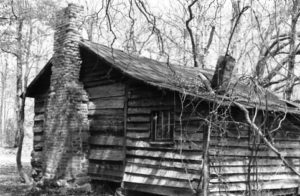
Comprising a log house, a complex of associated outbuildings of both log and frame, and 16.8 acres of pasturage and cropland, the McAuley Farm represents the development of a typical Mecklenburg County farmstead in the 19th and early 20th centuries, and is therefore eligible for designation as a local historic landmark. The McAuley Farm is also significant for its illustration of traditional log building types and methods of construction. It is further significant for its expression of typical early 20th-century farmhouse architecture and outbuilding types in the county. Finally, John Ellis McAuley, who inherited the property from his father and who substantially remodeled the house in 1914, was a noted craftsman and homebuilder in the Long Creek Community.
|
|
|

Note: This report was written in October of 1999. The house has since been moved to 14335 Huntersville-Concord Road and is currently undergoing restoration. None of the outbuildings, (with the exception of the wellhouse) survive.
The 1881 McAuley farmhouse is one of seven two-story log houses identified in the county, and the only one erected after the Civil War. Although remodeled and expanded to the rear, and now aluminum sided, the house retains its original I-house form and central-hall plan. The principal renovation of this 1881 house occurred in 1914, and many of the features added at this time survive to portray a middle-class farmhouse of this period in Mecklenburg County. Designed and crafted by Ephraim McAuley’s son John Ellis McAuley, a local house builder, the wraparound turned-post front porch, mantels, doors, and staircase are notable features of this 1914 remodeling that survive essentially intact.
The 1881 McAuley House is a traditional I-house and represents the numerous stages of remodeling and expansion. The original log, three-bay, two-story main block flanked by common bond brick end chimneys is an exceptionally late example of log construction for farmhouses in the county. The house was weatherboarded probably at the date of construction in 1881, and a frame real ell with central corbelled chimney was added before the turn of the century. In 1914, John Ellis McAuley, a house carpenter and son of the original owner Ephraim McAuley, remodeled both the exterior and interior. Evidence of the exterior modifications include the hip-roofed, turned-post front porch which wraps around the front facade, the second-story window centered over the porch, and the standing seam metal roof. John Ellis McAuley replaced the late 19th-century rear ell with a new one, and moved the “old ell,” as the McAuley family termed it, to a site west of the house where it still stands.
The interior has unique 1914 mantels in the two main rooms as well as in the bedroom of the rear ell — evidence of John Ellis McAuley’s craftsmanship and standards of design. These mantels have subtly curvilinear shapes and hand-carved brackets and floral-patterned motifs. The mantels in the two front rooms also feature mirrored overmantels. Five-panel doors with box locks representing the 1914 renovation are evident throughout the residence. John Ellis also altered the original plan of the main body of the I-house, removing the original central hallway that divided the two front rooms to enlarge the living room.
The 1881 McAuley House underwent modifications once again in 1968. During the ownership of Murray McAuley, the weatherboards were covered with aluminum siding, the six-over-six windows that were installed in 1914 were replaced by larger one-over-one panes, and the floors were covered with black-and-white tiles. Murray McAuley also added an additional wing to the east side of the rear elevation and enclosed the rear porch.
The McAuley farm complex also includes a ca. 1880 log corncrib and log barn that represent in their basic forms and half-dovetail notched construction outbuildings constructed of log in the county from the earliest period of white settlement to the early 20th century. They are basically intact vestiges of such log barns and cribs which once prevailed on farmsteads across rural Mecklenburg but which are now rare. The contributing early 20th-century frame auto garage and privy also represent in their forms and construction these buildings types as they appeared locally in this period.
The year after he bought the 98-acre farm, E. A. MeAuley is shown in the 1860 census records as having 2 horses, 2 milk cows, 1 other cattle and 5 hogs. He raised 117 bushels of wheat, 200 bushels of corn, 10 bushels of oats, 1 bale of cotton, l 0 bushels of peas and beans, 20 bushels of Irish potatoes, 30 bushels of sweet potatoes, and produced 100 pounds of butter, 4 pounds of beeswax and 50 pounds of honey.4 Ten years later, his production was still quite similar. In livestock, he had 2 horses, 1 mule, 3 milk cows, 2 working oxen, 5 other cattle, 7 sheep and 6 hogs; and produced 70 bushels of wheat, 300 bushels of corn, 30 bushels of oats, 3 bales of cotton and 6 pounds of wool.5 In both crops and livestock, this picture is typical for Mecklenburg County farmers in the post-bellum nineteenth century.
At E. A. McAuley’s death, the farm passed to his son, John Ellis McAuley (1861-1929).6 John Ellis McAuley was a well-known builder, master carpenter and toolmaker in the Hopewell area. He built a number of houses in the Long Creek community that are still occupied today, including the Osborne House and the Lindsey Parks House; he also made the brick for, and constructed St. Mark’s Episcopal Church and its rectory.7 Taking great pride in his work, McAuley was meticulous about his tools, many of which he fashioned himself:
His tools were his great pride. They were stored in a special chest, which fit on the back of his wagon, and when the chest was loaded, it weighed five hundred pounds. Each tool was cleaned and polished and whetted. . . At the end of the day’s work, the tools were cleaned again, cared for like favorite friends, neatly laid in their places again in the chest.8
Sometime in the 1890s, he moved in the two-story house to care for his father, and, on the senior McAuley’s death in 1909, inherited the family farm. In 1914, John Ellis made extensive changes to the two-story house, which is the appearance that it has today.9 Since John Ellis usually stayed with the family for which he was building a house, coming home only on weekends, and was not interested in farming, the farmstead was successfully managed by his wife, Alice Eugenia Johnston McAuley, who put five children through UNC-Chapel Hill.10 After John Ellis’s death in 1929, Alice McAuley received a life estate in the farm, and at her death in 1960, Murray McAuley (1900-1982) received the two-story house and farm as an inheritance and Murray’s brother Cecil R. received the adjoining parcel that had a smaller log cabin, which has subsequently been removed from the property.11 Murray McAuley farmed the land, and in addition to raising cotton and corn, also had cows, mules and chickens.12 The two-story house is presently owned by Evelyn R. McAuley, widow of Murray. Although threatened by rampant development and the outerbelt highway route, the McAuley farm remains as a fragile example of a post-Civil War Mecklenburg County farm that has been in the same family for three generations.
Notes
1 Mecklenburg County Deed Book 42, p. 395.
2 Interview with Paulette (Mrs. Cecil R.) McAuley and Evelyn (Mrs. Murray) McAuley by Mary Beth Gatza, 1988.
3 Ibid.
4 1860 U.S. Census, Agricultural Schedules, Mecklenburg County, N.C.
5 1870 U.S. Census, Agricultural Schedules, Mecklenburg County, N.C.
6 E. A. McAuley is buried in the Gilead A.R.P. Church cemetery. There is no record of the transfer.
7 William H. Huffman, “A Historical Sketch of the St. Mark’s Episcopal Church,” Charlotte Mecklenburg Historic Properties Commission, 1983. Mary Ellen Droppers, “John Ellis McAuley: craftsman-builder of Hopewell,” Mecklenburg Gazette, May 28, 1981, p. 16.
8 Droppers, cited above.
9 Interviews with Evelyn McAuley by Richard Mattson and William H. Huffman, 1989.
10 Droppers, cited above.
11 Mecklenburg County Will Book 19, p. 394; Deed Books 2148, p. 262 and 4407, p. 446.
12 See note 2.
Click here to view photo gallery of the McAuley Log House
Tax Parcel Number 025-081-07
Deed Book 2198, Page 262 Zoning: R15 Appraised Value: Land (16.160 acres)
Improvements
Total:
$45,250
86,710
$131,960
- A brief historical sketch of the property. This report contains a brief historical sketch of the property prepared by Dr. William Huffman, Ph.D..
- A brief architectural description of the property. This report contains a brief architectural description of the property prepared by Dr. Richard Mattson, Ph.D.
- Documentation of why and in what ways the property meets criteria for designation set forth in N.C.G.S. 16QA-40Q.5.
- special significance in terms of its history, architecture, and /or cultural importance. The Commission judges that the property known as the Ephraim Alexander McAuley Farm does possess special significance in terms of Charlotte-Mecklenburg. The Commission bases its judgment on the following consideration: l) the Ephraim Alexander McAuley Farm represents the typical development of a Mecklenburg County farmstead in the early 19th and 20th centuries, 2) the ca.1780 log house is among the most intact of the ten similar log dwellings inventoried in Mecklenburg County; 3) the ca.1880 farmhouse is one of seven two-story log houses identified in the county and the only one erected after the Civil War; 4) the property contains several log building types and methods of construction; 5) John Ellis McAuley, son of Ephraim, was a well-known builder in the Hopewell and Long Creek areas (his buildings include the landmark, St. Mark’s Episcopal Church); 6) in an era of limited opportunities for women, Alice Eugenia Johnston McAuley, wife of John Ellis McAuley, successfully managed the farmstead, and 7) the property is a rare example of a Mecklenburg County farm held in the same family for three generations.
- integrity of design, setting, workmanship, materials, feeling., and/or association. The Commission contends that the architectural description by Dr. Richard Mattson which is included in this report demonstrates that the Ephraim Alexander McAuley Farm meets this criterion.
- Ad Valorem Tax Appraisal. The Commission is aware that designation would allow the owner to apply for an automatic deferral of 50% of the Ad Valorem taxes on all or any portion of the property which becomes a designated “historic landmark.” The current appraised value of the improvements is $121,560. The current appraised value of the 32.96 acres is $92,290. The total appraised value of the property is $213,350. The property is zoned R15.
Date of Preparation of this Report: February 1990
Prepared by:
Dr. Dan L. Morrill in conjunction with
Nora M. Black
Charlotte-Mecklenburg Historic Landmarks Commission
1225 South Caldwell Street, Box D
Charlotte, North Carolina 28203
Telephone: 704/376-9115
Architectural Description:
Comprising two log houses, a complex of associated outbuildings of both log and frame, and about 14 acres of pasturage and cropland, the McAuley Farm represents the development of a typical Mecklenburg County farmstead in the 19th and early 20th centuries, and is therefore eligible under Criterion A (see Historic Context Statement – Post-Bellum Agriculture). The McAuley Farm is also significant under Criterion C for its illustration of traditional log building types and methods of construction. It is further significant under Criterion C for its expression of typical early 20th-century farmhouse architecture and outbuilding types in the county. The one-story, single-pen log house, said to date from ca. 1780, is among the most intact of ten one-story and story-and-a-half, single-pen log dwellings inventoried in Mecklenburg County. Said to have been the initial homeplace of Ephraim McAuley, the original owner of the McAuley Farm, this house retains its original basic form and one-room plan, as well as its original half-dovetail notching which is clearly visible behind subsequent weatherboarding. The interior includes exposed whitewashed log walls and original wooden flooring. Modifications which took place probably in the early decades of the 20th century, such as the frame shed-roofed rear addition and common-bond brick end chimney, do not obscure its traditional form, plan, and log construction. Rather, they typify changes that occurred to smaller log and frame dwellings county-wide during this period (Gatza 1987). The ca. 1880 McAuley farmhouse is one of seven two-story log houses identified in the county, and the only one erected after the Civil War. Although remodelled and expanded to the rear, and now aluminum sided, the house retains its original I-house form and central-hall plan (see Associated Property Type 1 – Houses – Log Dwellings). The principal renovation of this ca. 1880 house occurred in 1914, and many of the features added at this time survive to portray a middle-class farmhouse of this period in Mecklenburg County (see Associated Property Type 1 – Houses – Early 20th-century Small-Town Dwellings and Farmhouses). Designed and crafted by Ephraim McAuley’s son John Ellis McAuley, a local house builder, the wraparound turned-post front porch, mantels, doors, and staircase are notable features of this 1914 remodelling that survive essentially intact. The McAuley farm complex includes a ca. 1880 log corncrib and log barn that represent in their basic forms and half-dovetail notched construction outbuildings constructed of log in the county from the earliest period of white settlement to the early 20th century. They are basically intact vestiges of such log barns and cribs which once prevailed on farmsteads across rural Mecklenburg but which are now rare. The contributing early 20th-century frame auto garage and privy also represent in their forms and construction these buildings types as they appeared locally in this period (see Associated Property 2 – Outbuildings).
Historical Context:
In 1859, Ephraim Alexander McAuley (1826-1909) bought a 98-acre tract from Samuel Garrison for one thousand dollars, which began the since uninterrupted McAuley presence on this land that continues today.1 The farm contained a small log cabin, which McAuley and his family lived in until they built a larger, two-story log house in 1881.2 According to family tradition, McAuley preferred to build the house out of logs, even though such construction was long out of favor. The logs were acquired from a neighbor, Columbus McCoy (1834-1912), and with the help of other neighbors, the house was raised in April, 1881.3
The small log cabin was, according to family tradition, built in 1780, but this date cannot be independently verified. Although they are not clear, it appears from the deed records that the original owner of the site was either a James Sharpe, who acquired property in the area from 1794 to 1801 and is not otherwise identified, or John McKnitt Alexander (c.1733-1817), who sold 225 acres to Sharpe in 1801*
The year after he bought the 98-acre farm, E. A. McAuley is shown in the 1860 census records as having 2 horses, 2 milk cows, 1 other cattle and 5 hogs. He raised 117 bushels of wheat, 200 bushels of corn, 10 bushels of oats, 1 bale of cotton, 10 bushels of peas and beans, 20 bushels of Irish potatoes, 30 bushels of sweet potatoes, and produced 100 pounds of butter, 4 pounds of beeswax and 50 pounds of honey.5 Ten years later, his production was still quite similar. In livestock, he had 2 horses, 1 mule, 3 milk cows, 2 working oien, 5 other cattle, 7 sheep and 6 hogs; and produced 70 bushels of wheat, 300 bushels of corn, 30 bushels of oats, 3 bales of cotton and 6 pounds of wool.6 In both crops and livestock, this picture is typical for Mecklenburg County farmers in the post-bellum nineteenth-century (see Historic Contest Statement – Post-Bellum Agriculture).
At E. A. McAuley’s death, the farm passed to his son, John Ellis McAuley (1861 -1929)7 John Ellis was a well-known builder, master carpenter and toolmaker in the Hopewell area. He built a number of houses in the Long Creek community that are still occupied today; and also made the brick for, and constructed St. Mark’s Episcopal Church and its rectory.8 Taking great pride in his work, McAuley was meticulous about his tools, many of which he fashioned himself:
His tools were his great pride. They were stored in a special chest, which fit on the back of his wagon, and when the chest was loaded, it weighed five hundred pounds. Each tool was cleaned and polished and whetted… At the end of the day’s work, the tools were cleaned again, cared for like favorite friends, neatly laid in their places again in the chest.9
The wooden toolbox he carried with him on the back of his wagon is presently stored in the small log cabin.
Sometime in the 1890s, he moved in the two-story house to care for his father, and, on the senior McAuley’s death in 1909, inherited the family farm. In 1914, John Ellis made extensive changes to the two-story house, which is the appearance that it has today.10
Since John Ellis usually stayed with the family for which he was building a house, coming home only on weekends, and was not interested in farming, the farmstead was successfully managed by his wife, Alice Eugenia Johnston McAuley, who put five children through UNC-Chapel Hill.1 After John Ellis’ death in 1929, Alice McAuley received a life estate in the farm, and at her death in 1960, Murray McAuley (1900-1982) received the newer two-story house and farm as an inheritance and Murray’s brother Cecil R. received the adjoining parcel that has the smaller log cabin.12 Murray McAuley farmed the land, and in addition to raising cotton and corn, also had cows, mules and chickens. 13 The two-story house is presently owned by Evelyn R. McAuley, widow of Murray, and the adjoing parcel by Paulette McAuley, widow of Cecil R.
Although threatened by rampant development and an outerbelt highway route, the McAuley farm remains as a fragile example of a pre- and post-Civil War Mecklenburg County farm that has been in the same family for three generations.
Footnotes:
1 Mecklenburg County Deed Book 42, p. 395.
2 Interview with Paulette (Mrs. Cecil R.) McAuley and Evelyn (Mrs. Murray) McAuley by Mary Beth Qatza, 1988.
3 lbid.
4 Mecklenburg County Deed Books vol.14, p. 190; 16, p. 137; 17. p. 783; 15, p. 27; 14. p. 333; and Vol. 17, p. 612.
5 1860 U.S. Census, Agricultural Schedules, Mecklenburg County, N.C.
6 1870 U.S. Census. Agricultural Schedules, Mecklenburg County, N.C.
7E.A. McAuley is buried in the Gilead ARP Church cemetery. There is no record of the transfer.
8 William H. Huffman. “A Historical Sketch of the St. Mark’s Episcopal Church,”
Charlotte Mecklenburg Historic Properties Commission, 1983; Mary Ellen Droppers. “John Ellis McAuley: craftsman-builder of Hopevell.” Mecklenburg Gazette. May 28, 1981, p. 16.
9 Droppers, cited above.
10 Intervievs vith Evelyn McAuley by Richard Mattson and William H. Huffman, 1989.
11 Droppers, cited above.
12Mecklenburg County Will Book 19, p. 394; Deed Books 2148. p. 262 and 4407, p. 446.
13Seenote2.
This report was written on January 5, 1987
1. Name and location of the property: The property known as the Henry M. McAden House is located at 920 Granville Road, Charlotte, North Carolina.
2. Name, address, and telephone number of the present owner the property: The owner of the property is:
David M. McConnell & wife, W. Ona McConnell
920 Granville Road
Charlotte, NC 28207
Telephone: (704) 333-8716
3. Representative photographs of the property: This report contains representative photographs of the property.
4. A map depicting the location of the property:
5. Current Deed Book Reference to the property: The most recent deed to this property is recorded in Mecklenburg County Deed Book 2759, page 302. The Tax Parcel Number of the property is: 155-053-06.
6. A brief historical sketch of the property: This report contains a brief historical sketch of the property prepared by Dr. William H. Huffman.
7. A brief architectural description of the property: This report contains a brief architectural description of the property prepared by Thomas W. Hanchett.
8. Documentation of why and in what ways the property meets the criteria of designation set forth in N.C.G.S. 160A-399.4:
a. Special significance in terms of its history, architecture, and/or cultural importance: The Commission judges that the property known as the Henry M. McAden House does possess special significance in terms of Charlotte-Mecklenburg. The Commission bases its judgment on the following considerations: 1) the Henry M. McAden House, built in 1917-18, was the residence of Henry M. McAden (1872-1957), a leading bank executive and member of a family of important textile manufacturers in this region; 2) the present owner, David M. McConnell, has held many important public offices during his distinguished lifetime, including United States Ambassador to the United Nations in 1968-69; 3) the Henry M. McAden House was designed by Louis Asbury, an architect of local and regional importance; 4) the grounds of the Henry M. McAden House were designed by Earle Sumner Draper, a landscape architect of local and regional importance; and 5) the Henry M. McAden House is one of the older and more distinguished houses in Myers Park, an elegant streetcar suburb designed for the George Stephens Company by John Nolen, a nationally-important landscape architecture and urban planner.
b. Integrity of design, setting, workmanship, materials, feeling, and/or association: The Commission contends that the architectural description included in this report demonstrates that the property known as the Henry M. McAden House meets this criterion.
9. Ad Valorem Tax Appraisal: The Commission is aware that designation would allow the owner to apply for an automatic deferral of 50% of the Ad Valorem taxes on all or any portion of the property which becomes “historic property.” The current appraised value of the improvement is $249,240. The current appraised value of the 1.217 acres of land is $60,000. The total appraised value of the property is $309,240. The property is zoned R12.
Date of Preparation of this Report: January 5, 1987
Prepared by: Dr. Dan L. Morrill
Charlotte-Mecklenburg Historic Properties Commission
1225 S. Caldwell St.
Charlotte, NC, 28203
Telephone: (704) 376-9115
Dr. William H. Huffman
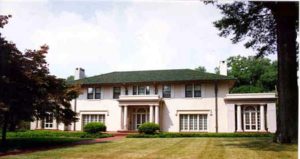
The McAden stands out as being different from many of the other large houses in Myers Park. Located at 920 Granville Road, it was built by textile man and banker Henry M. McAden in 1917-1918, and was designed by Charlotte architect Louis Asbury. The modified Roman and English country house with Roman Doric columns still retains a great deal of its original style, character, and detail.
Henry M. McAden (1872-1957) was born in Charlotte, and was one of the five survivng children of Rufus Yancy and Mary Terry McAden. His father, who had served in the state legislature from 1862-1867, and was Speaaker of the House in 1866, came to Charlotte in 1867 to become president of the two-year old First National Bank. In 1881, the elder McAden bult the McAden mills and McAdenville in Gaston County, and became involved in building the Atlantic & Charlotte Airline Railway, which was later absorbed into the Southern system.1 Henry McAden was educated at the old Barrier School in Charlotte and Hampden Sydney College in Virginia. After graduation he became president of the Piedmont Fire Insurance Company and an official of McAden Mills. In 1907, Henry McAden became president of the First National Bank, a position he held from 1907 until the bank closed in 1930, and also succeeded as head of the McAden Mills.2
On April 2, 1902, the successful young man married Alice Broadnax Jones, the daughter of Col. and Mrs. Hamilton C. Jones of Charlotte.3 The newly married couple originally took up residence on Park Avenue in Dilworth, but shortly thereafter moved to 915 S. Tryon Street. From Tryon, the McAdens moved to 3 Elizabeth Avenue, then to the new Myers Park streetcar suburb about 1914, on a street originally known as Road F, later #6 Granville Road.4

Alice Broadnax Jones McAden, ca.1934 reprint of
wedding portrait in the Society section of the Charlotte Observer
The Myers Park subdivision is an outgrowth of a period of sustained prosperity for Charlotte that began in the 1800s and ran to the end of the 1920s, and the vision and enterprise of John Springs Myers and his son-in-law, George Stephens. Myers, who had inherited 306 acres south of town from his father, Col. W. R. Myers, in 1869, added to it over the following twenty years until he acquired about eleven hundred acres. He built a country house on the Providence Road about two miles south of town, and the idea began to form that someday his plantation might become a residential area in a park-like setting. George Stephens, a star athlete at UNC, came to Charlotte after graduation in 1896, and shortly thereafter became a successful insurance man, realtor, banker, and developer. In 1911, he formed the Stephens Company for the purposes of developing a new streetcar suburb, Myers Park, and acquired the necessary land from his father-in-law and adjacent landowners, particularly the McD. Watkins farm. To service the subrub, a new streetcar line was bult that went out form Elizabeth Avenue along the entry gates at Queens Road to Providence Road, where it turned to continue on just past Queens College, which Stephens had secured for Myers Park by outbidding his rival developers with offers of free land, streetcar service, and purchase of their old property.5
To design the layout of Myers Park, Stephens hired John Nolen, a Harvard-educated landscape architect and pioneer in town planning who had previously designed Independence Park for the City of Charlotte in 1907. Nolen laid out a suburb with gently curving streets, limited access, and a wide variety of careful plantings, which gave it a unique and much copied character that was most unusual for the time. To oversee the landscape development, Nolen sent associates from his office, the most important of whom was Earle Sumner Draper. Draper came to Charlotte in 1915 to carry out and modify Nolen’s plan, and also to provide a landscape design for individual buyers. Two years later, he started his own business and eventually became one of the country’s best-known town planners. He built his own Tudor revival house in Myers Park at 1621 Queens Road in 1923.6
Although Nolen designed the subdivision to include houses of different economic levels, many wealthy Charlotte families built large houses along the main boulevards and major streets; Henry and Alice McAden were among them. In 1916, they decided to build a large house next to the one they were living in on Granville. To design their grand new home, the McAdens commissioned Charlotte’s first professionally trained architect, Louis Asbury, on June 8, 1916.7 The son of S. J. and Martha Moody of Charlotte, he attended Trinity College (now Duke University) and graduated in architecture from MIT. After practice with some firms in New York City, Asbury returned to Charlotte in 1908 and launched a career which spanned nearly fifty years and included over one thosuand commisssions in the area. Among the many outstanding designes may be included the Old County Courthouse, the C. P. Moody and John Jamison houses on Providence Road, Myers Park Methodist Church, the Law Building, the Hawthorne Lane Methodist Church.8
During the first week in June, 1917, work began on the McAden’s new house, and it was probably late 1917 or early 1918 when it was ready for occupancy,9 but it took until 1920 before every last detail was completed, which included landscaping according to a design by E. S. Draper.10 The total cost of destruction is reported to have been over $150,000. The McAdens were very active in civic and social affairs, and the home became one of the city’s centers of hospitality.
Unfortunately for the McAdens, the Great Depression brought devastation in its wake. On December 4, 1930, the First National Bank was in default, and had to close permanently.12 In 1935, the McAdens Mills also shut down because of a jurisdictional dispute between rival unions, and they did not open again until they were sold to the Stowe Mills of Belmont in 1939.13 In 1940, unpaid back taxes forced the sale of the Myers Park house, which was bought at auction by William Henry Belk of the Belk Brothers Department Store for $11,230.00. Belk conveyed the property back to Mrs. McAden, who in turn immediately reconveyed it to George M. Ivey, owner of Ivey’s Department Store, doubtless according to a prearranged agreement.14 Following the demise of his bank, Mr. McAden semi-retired, but he and Mrs. McAden continued to live in their Granville home until about 1942, when they moved to Cherokee Street in Eastover.
From 1948 to 1958, the McAden house was owned and occupied by Bessie Leslie, whose brother, also a resident of the house, donated the sedan chair of Queen Charlotte to the Mint Museum. Following her death, Carolyn Kirkpatrick Smith purchased the property, and in 1965, it was sold to the present owners, David M. and Ona A. McConnell.15 Mr. McConnell, an attorney, has a distinguished record of government, military, political and civic service. Prior to World War II, he served in various government legal positions, and during the war rose to the rank of colonel. He received, among other decorations, the Legion of Merit with oak leaf cluster, and attained the rank of Brigadier General in the North Carolina Militia. In 1968-9, he was a U. S. Ambassador to the United Nations and special adviser to the United Nations Economic and Social Council. Mr. McConnell has alos chaired the NC Board of Elections, the executive committee of the Mecklenburg County Demographic Party, been a member of the national platform committee of the Democratic Party, and served as an elector of the U. S. Electoral College. In Charlotte, he has also served on many civic and institutional boards.16
The McAden House is one of the unique features of Myers Park, which in itself has national historic importance, and its distinction as a Louis Asbury design with Earle Draper landscaping as well as its association with some of the city’s leading citizens make it fully worthy of historic designation.
Notes
1 Robert A. Ragan, The Pioneer Cotton Mills of Gaston County, NC and Gaston County Textile Pioneers (Charlotte: n.p., n.d.); Samuel A. Ashe, Biographical History of North Carolina V, 198-202.
2 Charlotte Observer June 23, 1957, p. 2D; LeGette Blythe and Charles Brockman, Hornet’s Nest (Charlotte: Charlotte Mecklenburg Public Library, 1961), p. 304.
3 Charlotte Observer June 23, 1957, p. 2D.
4 Charlotte City Directories 1902-1918.
5 Mary Norton Kratt and Thomas W. Hanchett, Legacy: The Myers Park Story (Charlotte: Myers Park Foundation, 1986), pp. 16ff; William H. Huffman, “A Historical Sketch of Queens College,” Charlotte Mecklenubrg Historic Properties Commission , 1984.
6 Legacy, cited above; William H. Huffman, “A Historical Sketch of the Draper House,” Charlotte Mecklenburg Historic Properties Commission, 1983.
7 Architectural Job List, #229, Southern Historical Collection, University of North Carolina at Chapel Hill.
8 Information on file at Charlotte Mecklenburg Historic Properties Commission.
9 Charlotte Observer, June 10, 1917, p.14.
10 Interview with Ona McConnell, Charlotte, NC, November 21, 1986 with Louis Asbury on visit with McConnells, October 1966.
11 Conversation with Louis Asbury, Jr. and Thomas R. Neukom.
12 Charlotte Observer December 5, 1930, p. 1.
13 Ragan, cited above.
14 Mecklenburg County Deed Books 1026, p. 545; 1029, pp. 167, 168.
15 Mecklenburg County Deed Books 1341, p. 431; 2212, p. 13; 2759, p. 302.
16 Who’s Who in America, 1985 edition.
Thomas W. Hanchett
The H. M. McAden House is one of the finest architectural speicmens in Myers Park, Charlotte’s premier streetcar suburb. Designed by MIT-trained Charlotte architect Louis Asbury and built about 1917 by contractor J. A. Gardner, the two-story dwelling commands a tre-shaded site located on curving Granville Road near the center of the neighborhood. Scorning the earlier excesses of Victorian architecture, Asbury gave the house a clean rectilinearity influenced by English and Italian country-house design. Its smooth stucco exterior is embellished only with understated Roman Doric columned porches. The spacious interior features handsome mantels, a panelled library and a grand horseshoe stair. Louis Asbury used an open, flowing plan and abudnat windows to connect the interior with the grassy front lawn and rear Italian garden created by noted planner Earle Sumner Draper. The landscape design was a major one in Draper’s career, and was featured in the magazine Southern Architect in 1924. The residence and grounds have seen no major changes in their seventy-year existence.
Exterior
In massing, the McAden House is a rectangular block with its long side facing the street and with a smaller rectangular service wing projecting from the rear. The hip roofs are covered in green tile. Under the wide overhanging eaves the rafter ends are left exposed and cut in subtlely scalloped shapes for ornamental effect. Heavy square downspouts of copper or brass catch rainwater from the gutters and direct it towards the ground.
The front elevation is symmetrical, framed by massive stucco interior end chimneys. The second story has five window openings with double-hung six-over-one-pane sash and slender decorative shutters. At the center of the first story is a shallow one-story portico that shelters the entrance. The portico features two pairs of Roman Doric columns supportico a heavy cornice, all executed in masonry. The entry itself consists of “French” double doors, each with twelve square panes of glass, flanked by full-length sidelights and topped by a fan-light transom. On either side of the portico is a trio of French doors, highlighted by a label molding above the lintel. These doors, which open onto the front terrace, were designed to allow parties held inside in the dining room and living room to spill outdoors. The red-brick terrace extends the full width of the front facade.
An important part of Asbury’s design, as seen from the street, are the matching side porches. These heavy one-story flat-roofed structures echo the front portico with stuccoed Doric columns and chunky cornices. Between the columns, all is glass, divided into small-paned windows and doors and fan-light transoms just like the main entrance.
The side and rear elevations of the house incorporate the same elements as the front, but with less concern for symmetry. Windows are double-hung units with single-pane lower sash and either four or six panes in the upper sash. There are no decorative shutters, but the elaborate downspouts seen at the front are used here as well. French doors open from the library and from the south side porch onto a back terrace much like the front one. The projecting rear service wing is two stories tall and has a one-story extension (part of the original design) at its rear.
Inside the McAden house, architect Asbury was somewhat less restrained in his use of historical embellishment. The floorplan itself is simple and elegant. Much of the first floor is devoted to areas for entertaining. A grand hall forms the core of the plan. To the left of it, through a wide archway (with sliding pocket doors, believed to be mahogany) in the large living room. To the right, through a similar opening, is the equally large dining room. Somewhat hidden, to the rear of the living room, is the library. To the rear of the dining room are the pantries and kitchen. The focal point of the house is the grand stair which ascends dramatically from the rear of the hall. It rises three steps to a landing, then splits in two, forming a horseshoe rising to the second floor landing. Bedrooms, all interconnected, radiate from the landing.
The living room features panelled wainscoting and elaborate cornices with egg-and-dart molding. The original electric “candle” sconces still grace the walls. The south end of the room is dominated by an Adam style mantel executed in cream and sienna marble and carved with a relief of seven children at play. French doors which flank this fireplace lead to the south side porch, called the solarium. The solarium ceiling has two light fixtures of milk-glass and brass. One wall of the solarium is a huge fireplace with a heavy Neoclassical mantel said to be of carved granite (now painted white).
The dining room also has an egg-and-dart cornice and panelled wainscoting, but it also features molding applied to the upper walls in rectangular shapes. Sconces here are said to be brushed steel. The present crystal chandelier replaces a smaller original fixture. There is a second creme and sienna marble Adam style mantel, of somewhat different design. French doors flank this fireplace and open onto the north side porch, the breakfast porch. It is nearly identical to the solarium in its granite mantel and abundant windows. Only the hanging light fixtures are different, variations on the milk-glass and brass theme.
The library is panelled floor to ceiling in a dark wood believed to be mahogany. Built-in bookcases, perhaps five feet high with leaded glass doors, line three walls. At the north side of the library a door leads to a small hall, which holds closets, a telephone room (relic of the early years when only the wealthy had phones, and even they had only one in the house), and a bathroom. The bathroom is finished in the same manner that all the dwellings bathrooms are.
Tile wainscoting extends some seven feet up the walls to a line of molding. Similar molding frames and oval mirror over the pedestal sink. The toilet here (and those in most other bathrooms throughout the house) is of comparatively recent vintage.
The service areas behind the dining room begin with an extremely large butler’s pantry. Low cupboards topped by counters (updated with formica) line the walls. Above the counters are glass-fronted china cabinets. Near the center of the floor is a radiator-like cast-iron warming table, a common feature in expensive houses of that day. A hallway runs from the rear of the butlers pantry — past a food-storage pantry and a walk-in refrigerator room — to the kitchen. This space has been almost completely renovated over the years, and a wall has been knocked out to turn an enclosed north porch into a breakfast nook. But the kitchen still has the original servants’ call-box on one wall. On command from elsewhere in the house, numbers flipped down behind the glass to let servants known where they were requested. Behind the kitchen is an enclosed rear entrance and a large laundry room. One can return to the grand hall by means of a back hall leading from the kitchen. This space includes the servants’ stair to the second floor, and also a high-ceilinged drapery closet which still has its hooks for hanging unneeded curtains.
The grand hall has a dentilled cornice, sconces, and panelled wainscoting. Umbrella closets flank the front door. The wells were at one time lined from wainscot to ceiling with wallpaper painted in European landscape scenes. Today only two sections of this survive, now set off with frames of molding. The horseshoe stair at the rear of the hall appears to follow Adam style precedents. Slender turned balusters support the with balustrades. A tall rear window lights the stairwell, and walls are completely panelled in wood.
Upstairs, opening directly onto the landing, is a small front sitting room. Around the landing are the doors to the bedrooms. Three bathrooms link the bedrooms, and there are also a pair of rear “sleeping porches.” These many-windowed rooms were a favorite of health-minded Americans in the 1910s. At the north rear corner of the second floor, at the top of the servants’ stair, is a small corridor with doors to a walk-in linen closet and a separate ironing room which once had its own Paul Bunyanesque built-in ironing board.
The master bedroom is at the south front corner of the second floor. It has a delicate carved wooden mantel, a clothes closet with built-in drawers and a light (apparently original) that goes on when the door opens, and on the wall next to the bed the original push-button electric light switch plus an elaborate system of call buttons for servants. The adjoining bathroom has the tile and fixtures already described downstairs, plus a tub and shower designed for all-body spray. An interesting feature is the provision of two sinks and two oval mirrors for the convenience of the lord and lady of the house. The other bathrooms and bedrooms are similar (including lighted closets with built-ins) but smaller. In the north front bedroom is a notable milk-glass and brass ceiling fixture taken from a downstairs room and said to hwe been designed by Tiffany Studios.
The house has a large attic with plastered walls and abundant natural light. The plaster has deteriorated in recent years and has fallen away from the wooden lath. One section of the attic is a walk-in cedar closet, still sweet with the aroma of the wood. There is also a basement under the house. Under the main house it is excavated to nearly full height, and is filled with brick structural piers with florins of the living red clay. Under the service wing the basement is more fully excavated and fully finished with brick walls and concrete floors. Segmental arched doorways here lead to a workroom and to the furnace room, where there is a new furnace. Asbury designed the house with a built-in “central vacume” system, a popular house-cleaning tool among the well-to-do of that time. Piping throughout the house leads to a unit which still stands in one corner of the furnace room. Also extant under the service wing is the mechanism for the mechanical sprinkler system, a fire-prevention feature that presumably is still hidden throughout the residence.
Grounds
Earle Sumner Draper’s grounds for the McAden house featured a tree-shaded front lawn with a brick drive running straight up one side to a circle in front of the detached rear garage. The brickwork here and throughout the grounds is (remarkably) in as good condition as the day it was laid, thanks to a concrete subbase. The garage, presumably by Louis Asbury, has stuccoed walls and a tile hip roof just like the main house. The original garage doors have given way to an overhead door. On either side of the automobile space is a servants’ apartment. Some interior changes have been made in the north apartment but the south apartment remains in original condition with two bedrooms, a bathroom, a kitchen, and a sitting room.
It was at the beck of the house that the most elaborate landscape work may be seen. Draper, one of the South’s prolific and influential landscape designers in the early twentieth century, crested Italian gardens. Writes historian Mary Kratt in the 1986 book Legacy: The Myers Park Story:
“‘Henry McAden was a particular friend of mine,’ remembers Earle Draper…. ‘I spent a lot of time laying out his estate gardens. His wife was the most enthusiastic gardener and we planted some very interesting and rare plants. She spent most of her time in the garden with flowers'” While Draper was working on the McAden garden, he and Mrs. Draper went abroad for several months to study European gardens. ‘It was one of the more elaborate gardens I planned for a limited space,’ remembers Draper. ‘We used every square foot of it.’ The [Southern Architect] article that featured McAden’s garden described … ‘an out-of-door living room with all its beauty, fragrance and color … shut off from the hurry and worry of the outside world [where] one can enjoy complete rest and receive inspiration from the ever-changing works of nature.'”
The design featured strict geometry defined by brick walkways. Draper divided the garden into two spaces. A patio-like area, which nestled within the “L ” formed by the rear wall is of the house, featured square walks and flowerbeds and had a large curved seat of carved marble at one edge. Adjacent was the second space, which featured a round walkway and a central fountain. Draper remembers that there were even native cedar trees trimmed to represent Italian cypress.
Today most of Mr. Draper and Mrs. McAden’s plants are gone, but the beds still hold their shape, the brick walkways survive in mint condition, and the marble seat remains a focal point.
This report was written on September 5, 1988
1. Name and location of the property: The property known as the Mayfair Manor is located at 237 North Tryon Street, Charlotte, N.C.
2. Name, address and telephone number of the present owner of the property: The owner of the property is:
Dunhill Associates Ltd. Partnership
PO Box 37321
Charlotte, N.C., 28237
Telephone: 704/377-0517
3. Representative photographs of the property: This report contains representative photographs of the property.
4. A map depicting the location of the property: This report contains a map which depicts the location of the property.
5. Current Deed Book Reference to the property: The most recent deed to this property is recorded in Mecklenburg County Deed Book 5580, Page 009. The Tax Parcel Number of the property is: 078-013-16.
6. A brief historical sketch of the property: This report contains a brief historical sketch of the property prepared by Paula M. Stathakis.
7. A brief architectural description of the property: This report contains a brief architectural description of the property prepared by Nora Mae Black.
8. Documentation of why and in what ways the property meets the criteria for designation set forth in N.C.G.S. 160A-399.4:
a. Special significance in terms of its history, architecture, and/or cultural importance: The Commission judges that the property known as the Mayfair Manor does possess special significance in terms of Charlotte-Mecklenburg. The Commission bases its judgment on the following considerations: 1) the Mayfair Manor, erected in 1929, was designed by Louis H. Asbury, an architect of local and regional importance; 2) the initial owners of the Mayfair Manor, Drs. J. P. Matheson and C. N. Peeler, were prominent citizens of Charlotte; 3) the Mayfair Manor, because it was designed to accommodate some permanent residents, documents the multi-functional nature of Uptown Charlotte in the late 1920’s; and 4) the Mayfair Manor makes an important contribution to the historic streetscape of North Tryon Street, a major axial thoroughfare in Charlotte.
b. Integrity of design, setting, workmanship, materials, feeling, and/or association: The Commission contends that the architectural description by Nora Mae Black which is included in this report demonstrates that portions o the Mayfair Manor meet this criterion.
9. Ad Valorem Tax Appraisal: The Commission is aware that designation would allow the owner to apply for an automatic deferral of 50% of the Ad Valorem taxes on all or any portion of the property which becomes “historic property.” The current appraised value of the improvement is $257,350. The current appraised value of the .80 acres of land is $104,940. The total appraised value of the property is $362,290. The most recent annual Ad Valorem tax bill on the property was $4,712.67. The property is zoned UMUD.
Date of Preparation of this Report: September 5, 1988
Prepared by: Dr. Dan L. Morrill
Charlotte-Mecklenburg Historic Properties Commission
1225 S. Caldwell St.
Charlotte, N.C., 28203
Telephone: 704/376-9115
Paula M. Stathakis
August 8, 1988
The Mayfair Manor was built on the corner of West Sixth Street and North Tryon Street in 1929 by Drs. J.P. Matheson and C.N. Peeler, who were perhaps better known as two of the founders of the Charlotte Eye, Ear, Nose, and Throat Hospital. 1 The ten story, 100 room hotel was intended for use by permanent and transient guests, with fifty rooms reserved for permanent residents. The earliest administration of the hotel included C.L. Lassiter, manager, J.W. Cole, assistant manager, C.B. Holmes, night manager, and W.R. Albea, dining room manager. 2 The Mayfair’s location was well suited for either the resident or the guest because it was situated only two blocks north of the city square, in close proximity not only to the heart of the business district but also to the many amenities downtown Charlotte had to offer patrons. Various small shops were well within walking distance of the Mayfair Manor as were larger establishments such as Ivey’s and Belk’s department stores and Montaldo’s. The Carolina Theater and the Charlotte Public Library were across the street from the hotel. The Tryon Cafe, Karnezes Confectioners, Sanitary Bakery, George Washington Lunch, Carolina Cafe, and Ridgeway’s Bakery would surely satisfy any culinary need that might conceivably be found lacking in the Mayfair restaurant. Second Presbyterian Church, First Baptist Church, and St. Peter’s Episcopal Church were all situated within two blocks. 3
The hotel stands on the site formerly occupied by the Tryon Street Methodist Episcopal Church, which purchased the property in 1862 from Joel A. Huggins for $2300.00. 4 The Tryon Street Methodist Episcopal Church sold the property to Home Real Estate and Guaranty Company on May 5, 1926 for $250,000.00. 5 On July 31, 1926, the property was purchased by Dr. J.P. Matheson with the provision that the church had the right to remove detachable personal property in the church, and the right to retain the church and Sunday School buildings without rent for a period of 18 months, beginning May 5, 1926. 6 By 1928, Matheson had hired Charlotte architect Louis Asbury to design the hotel. This agreement is listed as job number 723 in Asbury’s log book dated September 28, 1928 and is described as an apartment/hotel. 7 The structure destined to become the Mayfair Manor was unveiled for public inspection on the evening of November 15, 1929, a little more than a year later. 8
The Mayfair Manor debuted as a bright spot in the pall cast by the dramatic crash of the stock market just a month earlier. The same newspaper that duly reported a sluggish stock market also presented an enthusiastic two page tribute to Charlotte’s newest hotel.9 Much of the spread was dominated by contractors who had taken part in various stages of the hotel’s construction, and who took advantage of the opportunity not only to advertise their wares, hut to also tantalize the public with their specific contribution to the hotel. For example, the tile and marble work in the mezzanine and the tenth floor were an exact replica of that found in Atlanta’s Biltmore Hotel, the tile floor of the dining room was made of a material described as tile-tex , which was guaranteed for “life time service, a low initial cost, and no maintenance cost.” The furnishings came from McCoy’s Furniture of South Tryon Street, and the “Iron Fireman”, a new automatic stoker furnace was installed by A.Z. Price Company, Inc. 10
The unidentified reporter who wrote the preview article about the Mayfair Manor for the Charlotte Observer was ecstatic. 11 Adjectives such as “impressive”, “modern”, “luxurious”, and “massive” pepper the journalist’s narrative. This article is a valuable source of information about the original design and interior of the Mayfair Manor. The reporter began his tour of the building in the lobby which was summarily described as “impressive”; the floors were a terrazo with a tile base, the walls were covered with a material called craftex, the woodwork was crafted in walnut, and the fixtures were made of bronze. A “huge oven fireplace” was the focal point of the lobby. It was in this tastefully decorated lobby that one might also purchase cigars, cigarettes, and tasty Martha Washington Candy. The Mayfair Manor was the sole agent for Martha Washington Candy in Charlotte. Beneath the lobby on Sixth Street was the Mayfair Manor Barber Shop, managed by C.M. Brady, who supervised a five chair and one manicurist operation. The mezzanine had a lounge where guests could relax and meet their friends.
French doors marked the entrance to the dining room, the decor there followed the walnut and bronze motif of the lobby. Arched windows, craftex walls in soft colors, and a black and brown checked tile-tex floor all bestowed upon the dining room an “air of dignity”. The kitchen was described as spacious with the latest in cooking conveniences. A sampling of the original kitchen inventory of the Mayfair Manor included an electric dishwasher, a sterilizer with a 5000 dish capacity, steam tables, electric potato peelers, and mixing machines. A ventilating system capable of changing the kitchen air every three minutes was also on the list of notable extras. A skylight was built into the kitchen ceiling for the benefit of the workers. The dining room management planned to include a bakery in the future, and a special dessert and salad department was already incorporated into the kitchen organization.
“Every room has a bath” hailed the reporter as he continued his armchair tour. Tiled baths in various colors with tubs and showers were in each room. The rooms were furnished in “living room style” with double or twin Murphy beds, “luxurious” carpets and “fashionable” wallpapers. Each room had individual telephone service. The tenth floor was designed as a penthouse suite of “two skyscraper piazzas” which afforded what the reporter considered great views of Charlotte. Dr. Matheson planned to occupy the top floor along with Mr. Julian H. Little, president of the Independence Trust Company, Dr. Leinbach, and Mr. Little’s two nieces. 12
References were made in the article to a previously existing Mayfair Manor, and that the same high quality one had come to expect from the old establishment may be observed in the new one as well. Evidence of the “old” Mayfair Manor is scarce, but it was listed in the 1929 Charlotte City Directory under the management of C.L. Lassiter at 406 North Tryon Street, approximately two blocks north of the “new” Mayfair Manor. The new Mayfair Manor was the culmination of thirty years of effort by Mrs. Fannie L. Holmes, who began her career in Charlotte with a modest dining room and boarding house at 513 South Tryon Street. Mrs. Holmes, a Statesville native, ran this boarding house together with C.L. Lassiter. 13 By 1930, Mrs. Holmes had acquired two other businesses: The Hawthorne Dining Room and The Mayfair Manor. The 1930 Charlotte City Directory lists C.L. Lassiter as the president of the Mayfair Manor Inc., Mrs. Fannie L. Holmes was the vice-president, and Emmet S. Gray, as the secretary-treasurer. 14
Thus, the Mayfair Manor entered into Charlotte history. It was not the biggest, nor the grandest of our hotels, but it was considered quite fine in its day. In 1929, there were no less than fifteen hotels in Charlotte. The largest were the Charlotte Hotel at 239 West Trade and the Clayton Hotel at the corner of Church and Fifth streets. The Charlotte Hotel was undoubtedly the hallmark of the city, boasting a fireproof structure with 400 rooms, 400 bathrooms, a European Plan, and a dining room visited by such dignitaries as President and Mrs. Franklin and Roosevelt. The Mayfair Manor does not seem to have attracted such stellar guests, presumably because it was built for different purposes. The Mayfair Manor quietly thrived, however, on its corner long after the demolition of the Clayton Hotel, and it appears that it will outlive the Charlotte which was recently scheduled for demolition.
Dr. Matheson died in August 1937, and the property was acquired by the Mayfair Realty Corporation shortly afterward. 15 On September 1, 1959, the Mayfair Realty Corporation sold the property to Dwight L. Phillips. The new proprietor spent $225,000.00 in renovations and improvements on the hotel. 16 In December 1960, D.L. Phillips and his wife Louise sold the property to D.L. Phillips, Builders of North Carolina. 17 Following this transaction, the name of the hotel changed to the James Lee Motor Inn. 18 By October 1965, D.L. Phillips Investment Builders acquired additional property to the rear of the hotel. 19 These two tracts were sold in December 1980 to A.B. Wilkins Jr., owner of Delta Capital, for $300,000.00. 20 This transaction began what was to result in an unproductive series of acquisitions of the property by various investors who hoped to upgrade the hotel, which had suffered as the result of the decline of downtown Charlotte, into fashionable condominiums. The previous hotel owner, Charles Kinnard, had intentions of doing this himself, but could not afford the staggering cost of conversion estimated at $225,000.00 per floor. In December 1980, A.B. Wilkins announced his intention to work with Kinnard toward this end. 21
By February 1981, Kinnard and Wilkins came to an impasse. Kinnard placed an advertisement in the Charlotte papers announcing that the property was for sale by the owner; the ad was quickly denied by Wilkins. Kinnard’s actions were based on his desire to buy the hotel back from Wilkins. Therefore, Wilkins gave Kinnard an option to buy the hotel back if he could raise the funds. Kinnard’s time on this option had expired when he placed the ad. At that point, Wilkins had no interest in helping Kinnard, and he had already made plans for a joint renovation with another investor. 22
Wilkins posted signs around the hotel notifying the tenants that the hotel would close October 1, 1981, and that it would later re-open as a luxury hotel. 23 Wilkins’s plans never came to fruition. He sold the James Lee Motor Inn on January 4, 1982 for $392,000.00 to an investment firm of the Netherlands-Antilles , Elko Corporation, N.V., which planned to convert the hotel into a $4 million office condominium project, with completion projected for the summer of that year. 24 The renovation supervisor for Elko, Mr. Farley Gharagozlou, disclosed that the interior of the hotel had been completely stripped, and that future plans included the installment of a coffee shop in the basement and a restaurant in the penthouse. 25 These plans suddenly changed when the Elko Corporation decided to convert the James Lee Motor Inn into an elegant hotel, the Uptown Nova Plaza, which delayed the completion until summer 1983. 26
As the projected opening deadline drew near, the Charlotte News reported in May 1983 that an internal re-organization of the Elko Corporation would delay the project for an unspecified time.27 The fate of the former Mayfair Manor was vague at best, and the structure stood useless for another three years. Burt Gellman, whose firm owns Jonathan’s, a fashionable downtown restaurant one block north of the hotel site, made an unsuccessful bid to acquire the property in 1984. The Elko Corporation allegedly reneged on an agreement to sell the vacant hotel to him, and he took the matter to court in 1985, but he never gained the property. 28
Fallswood Investment Inc. purchased the hotel in May 1986, and then sold the property on December 18, 1986 to Omniswiss Properties Ltd. 30 The present owners of the property, The Dunhill Hotel Associates, purchased the hotel from Omniswiss Properties on August 6, 1987. 31 After six years of uncertainty, the former Mayfair Manor has a new lease on life. The Dunhill Hotel Associates have returned to the idea of restoring the building to a luxury hotel. The revival of this structure will be an asset to the Charlotte community, not only as a new and viable business, but also as a tangible part of Charlotte’s past.
ENDNOTES
1 Wade Harris, ed. The City of Charlotte and the County of Mecklenburg. Charlotte: Chamber of Commerce, 1924.
2 The Charlotte Observer 15 November 1929, p.10.
3 Sanborn Fire Insurance Maps 1929, Sanborn Map Company, New York. Skeleton Maps 2 and 3, sections 2a and 3b; Charlotte City Directory, 1929.
4 Mecklenburg County Registry of Deeds. Deed Book 4 pg. 791.
5 Mecklenburg County Registry of Deeds. Deed Book 625 pg. 225.
6 Mecklenburg County Registry of Deeds. Deed Book 628 pg. 511.
7 Southern Historical Collection, Louis Asbury Papers, No. 4237. University of North Carolina-Chapel Hill.
8 The Charlotte Observer 15 November 1929, p. 11.
9 Ibid., p. 10, 11.
10 Ibid., p. 10.
11 Ibid., p. 11. All information concerning the original interior of the hotel was taken from this article.
12 Ibid.; Charlotte City Directory, 1930.
13 Charlotte City Directory, 1926.
14 Ibid., 1930.
15 Records of the Mecklenburg Medical Society; Mecklenburg County Registry of Deeds. Deed Book 1120-254.
16 The Charlotte News 21 October 1981, p. 1.
17 Mecklenburg County Registry of Deeds. Deed Book 2220 pg. 46
18 The Charlotte Observer 8 October 1985, p. 12a.
19 Mecklenburg County Registry of Deeds. Deed Book 2689 pg. 308.
20 Mecklenburg County Registry of Deeds. Deed Book 4376 pg. 298. The Charlotte Observer 25 January 1981, p. 5b.
21 The Charlotte Observer 21 January 1981, p. 5b.
22 The Charlotte News 12 February 1981, p. 12a.
23 Ibid., 17 September 1981, p. 13a.
24 Mecklenburg County Registry of Deeds. Deed Book 4500 pg. 395
25 The Charlotte Observer 11 April 1982, p. 5b.
26 The Charlotte Observer 25 October 1982, p. 1a.
28 Ibid., 10 August 1985, p. 12a.
29 Mecklenburg County Registry of Deeds. Deed Book 5223 pg. 339, Deed Book 5403 pg. 647.
30 Mecklenburg County Registry of Deeds. Deed Book 5580 pg. 9.
By Nora Mae Black
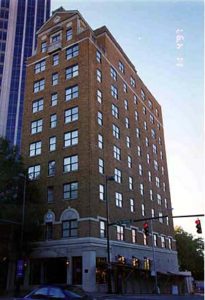
The former Mayfair Hotel, located on the northwest corner of the intersection of North Tryon Street and 6th Street, is an example of one of the small, privately-owned hotels that provided a resting place for travelers to Charlotte during the beginning of this century.
The design of the building was executed by Louis H. Asbury, a Charlotte architect. The building was originally known as the Mayfair Hotel. Later it became the James Lee Motor Hotel. A top to bottom renovation of the building is on the drawing board. Under this proposal, the building would become a luxury hotel known as The Dunhill Hotel.
The building consists of eleven floors. There is a basement with a small sub-basement. The first floor, or Tryon Street level, housed the lobby. At the northwest end of the building, the first floor gives way to two mezzanine levels. The protective railings are missing from the lobby level and the upper mezzanine; however, a metal stairway still connects the levels.
Above the lobby, or first floor, there are eight floors that formerly contained the guest rooms. The ninth floor contained a penthouse suite for the owner of the Mayfair Hotel as well as a few guest rooms.
Exterior
The Mayfair Hotel has a nine-story symmetrical facade facing North Tryon Street. The West 6th Street facade overlooks Discovery Place and from the upper floors, Fourth Ward. The entire structure is covered with a sand-colored brick (much darkened due to dirt) laid in running bond. Cast stone decorates the remains of the North Tryon Street entrance and the brick facade at the top of the second floor windows. The cast stone continues on the West 6th Street facade and becomes a surround for the tops of the last three windows on the second floor. A cast stone course wraps all four facades at the top of the eighth floor windows. All windows have cast stone sills. The original windows were removed during an earlier renovation and replaced with double-hung residential windows. Double windows are usually 6/6 while others are 8/8 and 2/2. On the North Tryon Street facade the three-ranked windows consist of a single window flanked by pairs of adjacent windows. On the 6th Street facade the seven-ranked windows consist of the following pattern a single window, a pair of adjacent windows, a single window, a single window, a single window, a pair of adjacent windows, and a single window. The south facade has an irregular pattern of windows of several different sizes. The west, or rear, facade has three windows of differing sizes on each floor above the second floor.
Most of the North Tryon Street level facade has been removed. However, it is still possible to see the remains of Corinthian capitals that once decorated the pilasters at the front entrance. The most impressive remaining part of the facade is at the penthouse level. There the owner’s living quarters overlooked North Tryon Street. The sitting room did not extend the full width of the facade, it became a square room flanked by two balconies. The brick of the facade formed the protective barrier on the Tryon Street elevation. Topping the protective barrier, each balcony had a cast stone urn and a cast stone circular medallion for decoration. On the north and south elevations, the small balconies have balustrades of cast stone with flower boxes. On the Tryon Street elevation a narrow center balcony, flanked by single windows, projects over the street. A half round pediment extends over the balcony. To each side of the pediment decorative cast stone ovals are laid into the brick over the windows. There is a circular stone medallion in the center of the pediment. A raking cornice of cast stone tops the pediment. A cornice of cast stone continues part way around the side (north and south) elevations.
Interior
Much of the interior of the building was destroyed during an earlier attempt at renovation. Masonry interior bearing walls that provided wind bracing were removed and replaced with steel structural members. The original elevators were removed and never replaced. Part of the roof is gone with the result that much water enters the building. At places, the concrete floors have holes in them. Ceilings have been taken down exposing the open web steel joists. Plaster and other wall coverings have been removed exposing the structural steel frame. The partitions that separated the ‘guess rooms have been torn down.
The most intact portion of the original building is the penthouse suite of the owner. The penthouse has a marble floor. A fireplace in the sitting room overlooking North Tryon Street has an ornate carved plaster mantel with a green marble fire surround. Plaster crown molding with carved dentils decorate the sitting area. In another room of the owner’s suite, original wood paneling covers the walls.
In Closing
The Mayfair Hotel building provides a solid architectural presence at the corner of North Tryon Street and 6th Street. Its proximity to Discovery Place, Spirit Square and the new market make it an ideal overnight location for visitors to Charlotte. Those having business in the central business district would also find that it is within walking distance of the many office towers. Since so much of the original exterior fabric is unchanged and in relatively good condition, it could be rehabilitated and become a landmark building in a revitalized North Tryon Street corridor.
SPECIAL NOTE: The Mayfair Manor has been substantially renovated since the above architectural description was written. This renovation, however, has not destroyed those portions of the property which possess historic significance.